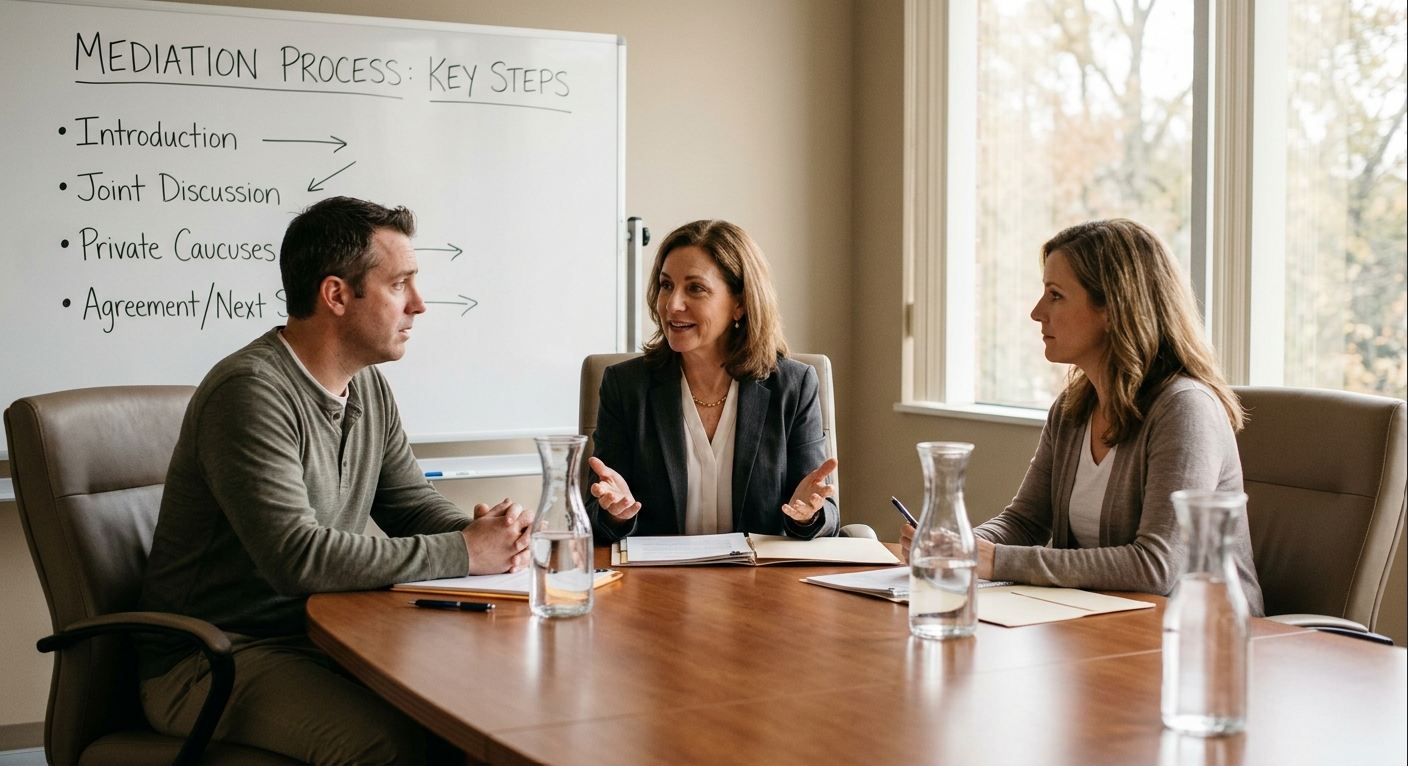
Conflict is a natural part of life. Whether it involves family members, business partners, neighbours, employers and employees, or community members, disagreements can become emotionally exhausting and difficult to resolve without assistance. Many people recognise the value of mediation but are uncertain about what happens during the process.
Questions such as "Will I have to speak directly to the other party?", "Will the mediator decide who is right?", or "Is mediation legally binding?" are common concerns for individuals considering mediation for the first time.
Understanding the mediation process can help reduce uncertainty and allow parties to approach the process with confidence.
Professional mediation is designed to create a safe, respectful, and structured environment where parties can communicate openly, identify their interests, and work collaboratively toward mutually acceptable solutions.
This article explains each stage of the mediation process and what you can expect from beginning to end.
What Is the Mediation Process?
The mediation process is a structured yet flexible approach to resolving disputes through facilitated dialogue. An independent and impartial mediator guides discussions, encourages constructive communication, and helps the parties explore practical solutions.
Unlike litigation, mediation does not involve a judge making decisions or determining who wins or loses. Instead, the parties themselves remain in control of the outcome.
The mediator's role is to facilitate, not to judge, impose decisions, or provide legal advice.
Stage 1: Initial Contact and Enquiry
Every mediation begins with an initial enquiry.
One or both parties contact the mediator to explain the nature of the dispute and determine whether mediation is an appropriate method of resolution.
During this stage, the mediator typically:
• Explains the purpose of mediation.
• Describes how the process works.
• Discusses confidentiality.
• Answers preliminary questions.
• Determines whether the dispute is suitable for mediation.
• Explains fees and scheduling.
This first conversation is often reassuring because it helps parties understand what to expect before committing to the process.
Stage 2: Pre-Mediation Preparation
Once the parties agree to participate, the mediator begins preparing for the mediation.
Preparation may involve:
• Gathering background information.
• Understanding the issues in dispute.
• Identifying the parties involved.
• Explaining the mediation agreement.
• Confirming voluntary participation.
• Scheduling the mediation session.
The mediator remains neutral throughout this preparation and does not take sides.
Good preparation often contributes significantly to a successful mediation.
Stage 3: Opening Session
The mediation session usually begins with introductions.
The mediator welcomes everyone and establishes a respectful atmosphere before explaining:
• The purpose of mediation.
• The mediator's neutral role.
• Confidentiality.
• Ground rules for respectful communication.
• The structure of the session.
Ground rules commonly include:
• Allowing each person to speak without interruption.
• Listening respectfully.
• Using appropriate language.
• Focusing on solutions rather than blame.
Creating a safe environment from the outset encourages productive dialogue.
Stage 4: Each Party Shares Their Perspective
Each participant is given uninterrupted time to explain the dispute from their own perspective.
This stage allows parties to:
• Express concerns.
• Clarify misunderstandings.
• Explain how the conflict has affected them.
• Share their expectations.
For many participants, this is the first time they feel genuinely heard.
The mediator listens carefully, asks clarifying questions where appropriate, and summarises key points to ensure mutual understanding.
Stage 5: Identifying the Real Issues
Conflicts often appear to be about one issue when deeper concerns exist beneath the surface.
For example, a disagreement about money may reflect concerns about trust, respect, communication, or fairness.
The mediator helps the parties distinguish between positions ("what they want") and interests ("why it matters").
By identifying the underlying interests, the parties are often able to discover common ground that was previously overlooked.
Stage 6: Exploring Options
Once the issues have been clarified, attention shifts toward developing possible solutions.
Rather than focusing on who is right or wrong, the parties are encouraged to explore options that address everyone's legitimate interests.
The mediator facilitates brainstorming without pressuring the parties to accept any proposal.
Creative solutions often emerge during this stage because the parties have greater flexibility than they would in court.
Stage 7: Negotiation
Negotiation is at the heart of mediation.
The mediator helps the parties evaluate their options, identify areas of agreement, and narrow the remaining differences.
Throughout the negotiation process, the mediator may:
• Reframe negative statements.
• Clarify misunderstandings.
• Encourage realistic expectations.
• Test the practicality of proposed solutions.
• Maintain constructive communication.
The objective is not compromised for its own sake but an agreement that is fair, workable, and acceptable to everyone involved.
Stage 8: Reaching an Agreement
If the parties reach consensus, the agreed terms are documented clearly.
A well-drafted mediation agreement should:
• Reflect the intentions of the parties.
• Be practical and realistic.
• Clearly define responsibilities.
• Address implementation timelines where appropriate.
• Reduce the likelihood of future misunderstandings.
Depending on the nature of the dispute and applicable law, parties may seek independent legal advice before signing the agreement.
What If No Agreement Is Reached?
Not every mediation results in a full settlement, and that is perfectly acceptable.
Even where complete agreement is not achieved, mediation often produces significant progress by:
• Improving communication.
• Clarifying misunderstandings.
• Narrowing the issues in dispute.
• Reducing hostility.
• Identifying possible future solutions.
In many cases, parties continue discussions after the formal mediation session and later reach agreement.
The Role of the Mediator
A professional mediator does not:
• Decide who is right or wrong.
• Take sides.
• Provide legal representation.
• Force parties to agree.
• Impose decisions.
Instead, the mediator:
• Facilitates communication.
• Encourages respectful dialogue.
• Maintains neutrality.
• Protects confidentiality.
• Assists with problem-solving.
• Helps parties explore options.
• Supports informed decision-making.
The mediator's impartiality is essential to building trust in the process.
Benefits of Understanding the Mediation Process
Knowing what to expect before attending mediation helps parties:
• Feel more confident.
• Reduce anxiety.
• Participate more effectively.
• Communicate more openly.
• Focus on solutions rather than conflict.
• Make informed decisions.
Preparation often contributes to better outcomes for everyone involved.
Frequently Asked Questions
1. How long does mediation take?
The length of mediation depends on the complexity of the dispute. Some matters are resolved in a single session, while others may require several meetings.
2. Can mediation be conducted online?
Yes. Many disputes can be successfully resolved through secure online mediation, allowing parties in different locations to participate conveniently.
3. Is everything discussed confidential?
Professional mediation is generally confidential, subject to applicable law and any agreed exceptions.
5. Do I need a lawyer?
Not necessarily. However, parties are free to seek independent legal advice before, during, or after mediation if they wish.
Conclusion
The mediation process is designed to replace confrontation with communication and conflict with collaboration.
By providing a structured, confidential, and impartial environment, mediation empowers parties to understand one another, explore practical solutions, and develop agreements that meet their unique needs.
Whether the dispute involves family, business, employment, land, community, or organisational matters, understanding the mediation process is the first step toward resolving conflict constructively.
With the guidance of a qualified mediator, what may seem like an impossible dispute can become an opportunity for dialogue, understanding, and lasting resolution.
Ready to Begin Your Mediation Journey?
If you are facing a dispute and would like to explore a confidential, impartial, and professional approach to resolving it, Geoffrey Musera, CPM – Certified Professional Mediator | Conflict Resolution Practitioner, is here to help.
With over 10 years of experience in conflict resolution and Alternative Dispute Resolution (ADR), Geoffrey is committed to helping individuals, families, businesses, and organisations navigate conflict with integrity, professionalism, and respect.
Contact today to schedule a confidential consultation and take the first step toward a practical, mutually acceptable, and lasting resolution.
About the Author
Geoffrey Musera, CPM, is a Certified Professional Mediator and Conflict Resolution Practitioner with over ten years of experience in conflict resolution and Alternative Dispute Resolution (ADR). His practice focuses on family, workplace, commercial, land, community, faith-based, and organisational mediation, helping clients resolve disputes through confidential, ethical, and client-centred mediation.